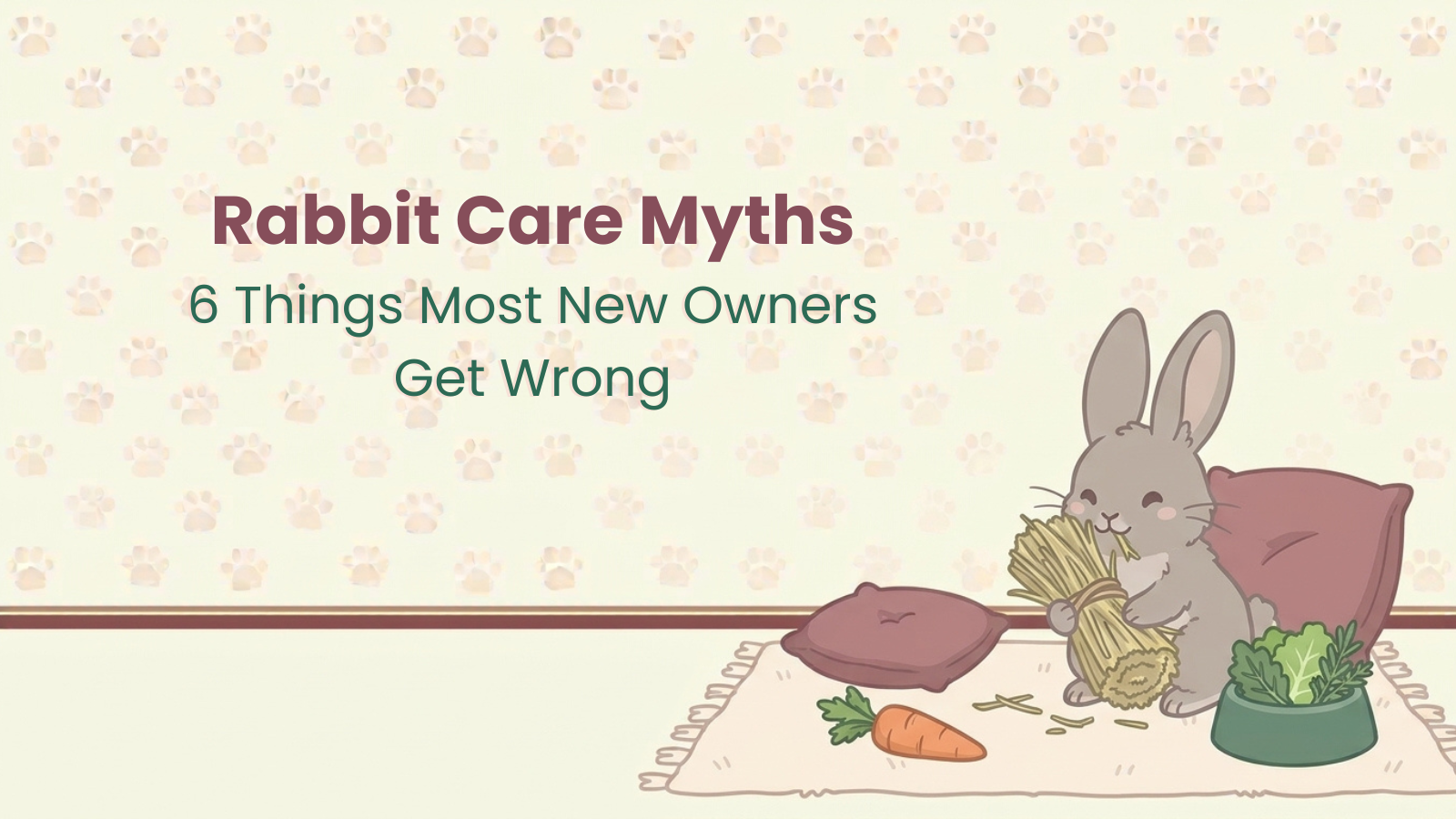
Rabbits get sold as the easy pet: a hutch in the garden, a bowl of food, a carrot now and then. It’s a picture a lot of people still carry around, and it’s behind many of the rabbits that end up in shelters. Here are six myths worth dropping before you bring one home, or if you already have.
Myth 1: Rabbits Are Low-Maintenance Starter Pets
They don’t need walking, but that’s about where “easy” ends. The House Rabbit Society points out that a rabbit’s quarters need daily cleaning, and fresh food and water must be offered every day, including a salad of well-washed, dark-green leafy vegetables (House Rabbit Society). PetMD makes the same point: domestic rabbits need as much attention as any other pet, including a specific diet, daily monitoring and care from a vet who knows rabbits (PetMD).
Myth 2: Rabbits Live on Carrots
This one is everywhere, and it’s wrong. The RSPCA says a rabbit’s diet should be mostly fresh hay and grass (about 85%), with some leafy greens (10%) and a few pellets (5%). Carrots are high in sugar and can contribute to weight gain and digestive problems, so they’re an occasional treat. The carrot tops, the leafy part, are a better choice (RSPCA).
Hay isn’t just filler. It keeps the gut moving and wears down teeth that never stop growing.
Myth 3: A Hutch Is a Fine Permanent Home
The RSPCA says a traditional small hutch is not a suitable sole and permanent home for any rabbit, because it can’t meet their needs (RSPCA). The House Rabbit Society adds that rabbits are social animals, and a backyard hutch can leave them isolated (House Rabbit Society). Many do best indoors with space to move and people around.
Myth 4: Rabbits Only Live a Year or Two
Not if they’re well cared for. The House Rabbit Society says indoor rabbits that are looked after can live 7 to 10 years, and some live into their teens (House Rabbit Society). That’s a long commitment, similar to some dog breeds.
Myth 5: Rabbits Don’t Need Vet Care Like Dogs and Cats
Vaccination requirements vary by country, so your vet will tell you what applies where you live. But regular checkups help catch small problems before they become big ones, and the House Rabbit Society recommends that companion rabbits be spayed or neutered by a vet with rabbit experience (House Rabbit Society). Not every clinic treats rabbits, so it’s worth finding one before you need it.
Myth 6: If a Rabbit Skips a Meal, Just Wait and See
This is the dangerous one. The House Rabbit Society says problems that are minor in some species, like a day or two of not eating, can be life-threatening in rabbits and may need immediate veterinary attention (House Rabbit Society). The RSPCA says the same about droppings: if eating or drinking changes, or droppings reduce or stop, call your vet straight away (RSPCA).
What Actually Helps
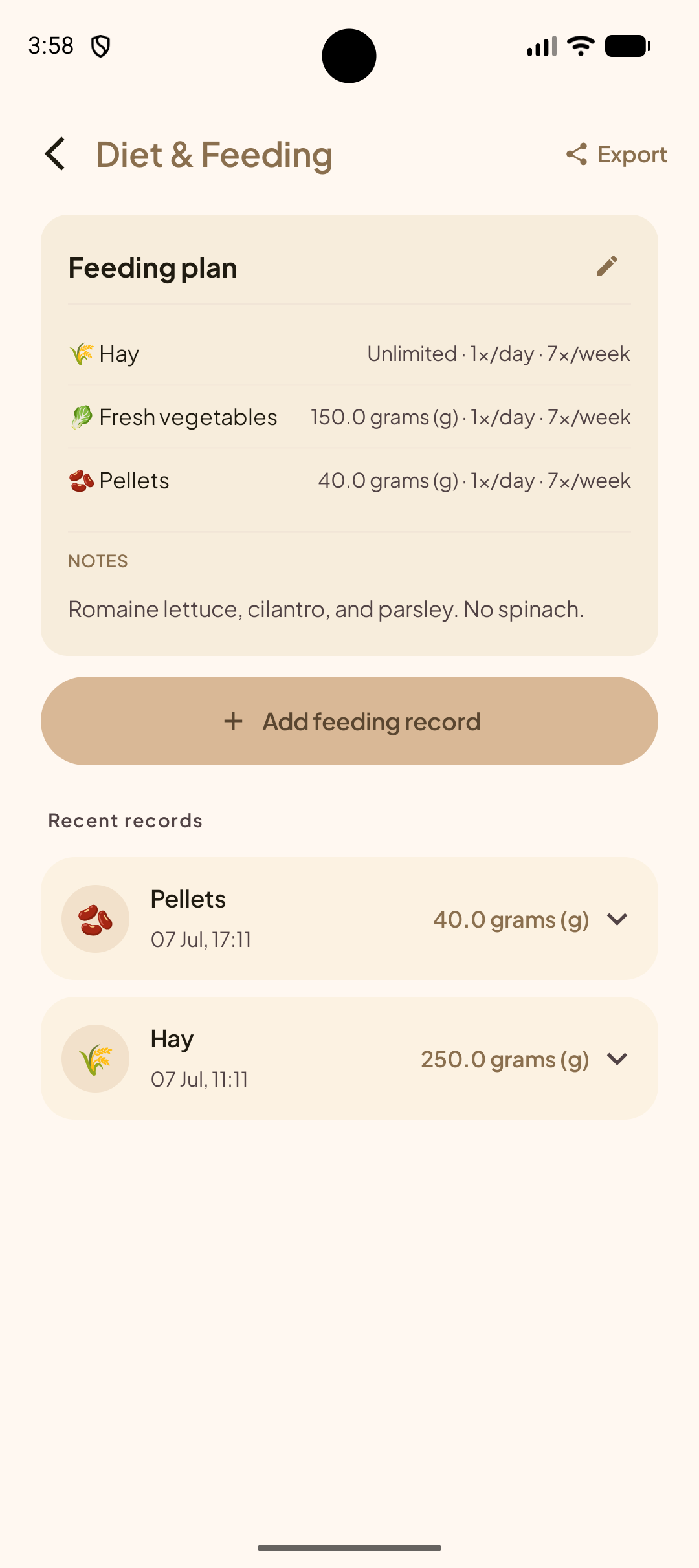
- Unlimited good-quality hay every day, with a small, measured amount of pellets
- A daily handful of safe leafy greens
- A roomy, safe, indoor space, with time to run and explore
- A daily look at appetite and droppings
- A vet who knows rabbits, found before there’s an emergency
How to Stay on Top of It
Most of these myths come down to the same thing: rabbits need small, regular care that’s easy to let slip. I use Mochi to keep each pet’s feeding plan and vet visits in one place, so when something changes, I can see what’s normal for them instead of trying to remember. It doesn’t replace paying attention, but it makes the daily routine easier to check.