
Not every vet clinic sees ferrets, rabbits, or reptiles — and finding that out for the first time during an actual emergency is a worse moment than checking in advance.
Quick Reference: Typical Visit Frequency
| Species | Healthy Adult | Notes |
|---|---|---|
| Ferrets | Annual, every 6 months after age 3-4 | Adrenal disease and insulinoma risk rises earlier than in cats/dogs |
| Rabbits | Annual | More frequent if outdoor access or any GI history |
| Reptiles | Annual, or at setup + as needed | New enclosures/species benefit from an early check-in visit beyond just the annual |
These are general starting points, not fixed rules — an exotic vet will adjust based on species, age, and any existing conditions.
Why «Any Vet» Isn’t Always the Right Answer
General small-animal vets are trained primarily around dogs and cats, and many don’t see enough exotic cases to stay current on species-specific issues — a ferret’s adrenal disease presentation or a reptile’s metabolic bone disease aren’t things every general practice encounters regularly. This isn’t a knock on general vets; it’s simply a specialization gap, similar to why a general physician refers certain human cases to a specialist. Calling ahead to confirm a clinic actually treats your specific species — not just «exotics» as a vague category — saves a wasted trip.
What to Expect at an Exotic-Specific Visit
- More species-specific questions upfront: diet brand, enclosure setup, temperature/humidity if relevant, and housing details that a dog/cat vet visit wouldn’t typically ask about
- Weight and body condition checks tailored to the species: what’s normal varies enormously between a ferret, a rabbit, and a bearded dragon, and an exotic vet calibrates differently than a general scale reading would suggest
- A willingness to discuss husbandry, not just medicine: a lot of exotic pet health issues trace back to enclosure setup or diet rather than illness in the traditional sense, and a good exotic vet treats that as part of the visit, not a separate conversation
Signs an Exotic Pet Needs a Visit Sooner Than Scheduled
- Any sudden change in appetite, energy, or waste output — exotic species often have less obvious «sick» behavior than dogs, so subtle changes matter more
- Visible injury, swelling, or anything asymmetrical in appearance
- For reptiles specifically: any change in shedding pattern, or refusal to eat across multiple consecutive feeding opportunities
What to Do This Week
- Confirm your current vet (or find one) actually treats your specific species, not just «small animals» broadly
- Check when the last actual vet visit happened for each exotic pet in the household — it’s easy for this one to slip further than a dog or cat’s schedule since there’s no obvious yearly reminder tied to it
- If you have more than one type of exotic pet, note whether they need different vets entirely (a reptile vet and a ferret-experienced vet aren’t always the same person)
Keeping Every Species on Its Own Schedule
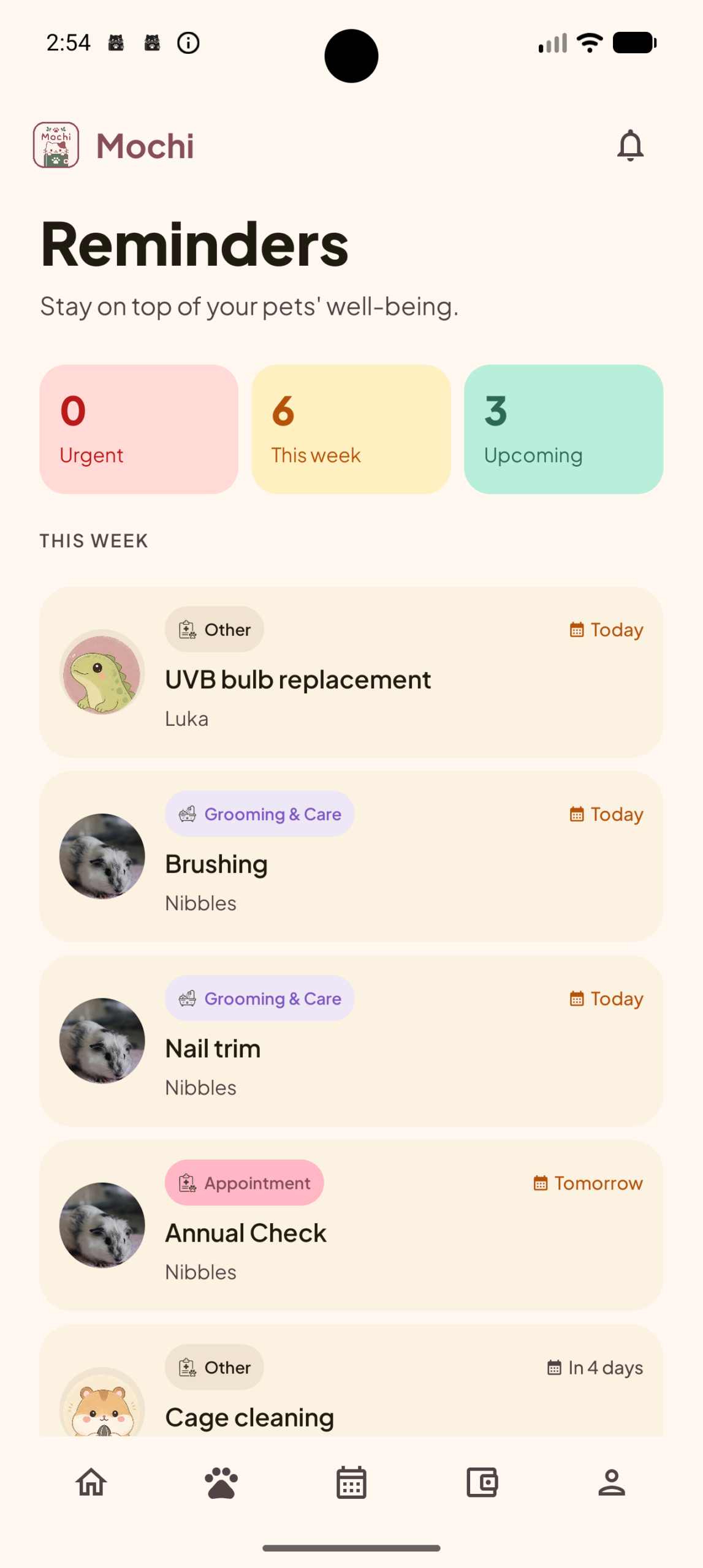
Exotic pet care often involves juggling different vets, different visit frequencies, and different early-warning signs per species — which is exactly the kind of thing that’s easy to keep straight for one pet and lose track of once there are two or three different types in the house. Mochi treats every species as a full option rather than an afterthought, so a ferret’s 6-month checkup and a reptile’s annual visit each show up on their own schedule instead of blending into one vague «vet stuff» reminder.