
What should actually be in a pet’s medical history?
At minimum: vaccine dates, any diagnosed conditions, current medications and dosages, known allergies, past surgeries, and weight readings over time. Vets use this to catch patterns a single visit can’t show — a weight trend, a medication interaction, or a vaccine that’s coming due.
Why does a new vet always ask for this, even with existing records?
Because a written record is more reliable than a verbal summary, and it’s faster for everyone. «She’s been mostly healthy» doesn’t tell a vet much; «FVRCP given 14 months ago, no known allergies, 0.8 lb weight gain over the past year» gives them something to actually work from in the first two minutes of an appointment, rather than reconstructing history through questions.
Does this matter for a healthy pet with no ongoing issues?
Yes, arguably more than for a pet already being actively treated. A healthy pet’s baseline weight, typical behavior, and vaccine timing are exactly what a vet compares against if something changes later — without a baseline, «is this normal for them?» becomes a much harder question to answer quickly.
What’s the minimum to track if I’m just starting out?
Vaccine dates and any known allergies are the two that matter most immediately, since they affect what a vet can safely do at the very next visit. Weight and medication history matter more over time, but starting with just those two is far better than tracking nothing while waiting to build a «complete» system.
How should I organize records across multiple pets?
Keep each pet’s information fully separate, even if two pets share a vet or a treatment schedule — mixing species or individual pets into one running note is the most common way details get misattributed later (a dosage meant for one dog applied to another, a vaccine date confused between two cats).
What if I switch vets or move to a new city?
Bring whatever records exist, even if incomplete — most vets would rather work from a partial history than none. If records genuinely don’t exist for a rescue or older pet, say so directly rather than guessing at dates; a vet can sometimes use a titer test or physical signs to estimate vaccine status instead of restarting everything by default.
Does this apply the same way to exotic pets, not just dogs and cats?
Yes, and arguably it matters more — exotic pet vets are less common, so continuity of records matters when you can’t always see the same vet every time. A ferret’s distemper history or a reptile’s UVB bulb replacement dates are just as much «medical history» as a dog’s rabies record, even though they don’t always fit the same paperwork template a vet clinic defaults to.
Keeping It in One Place
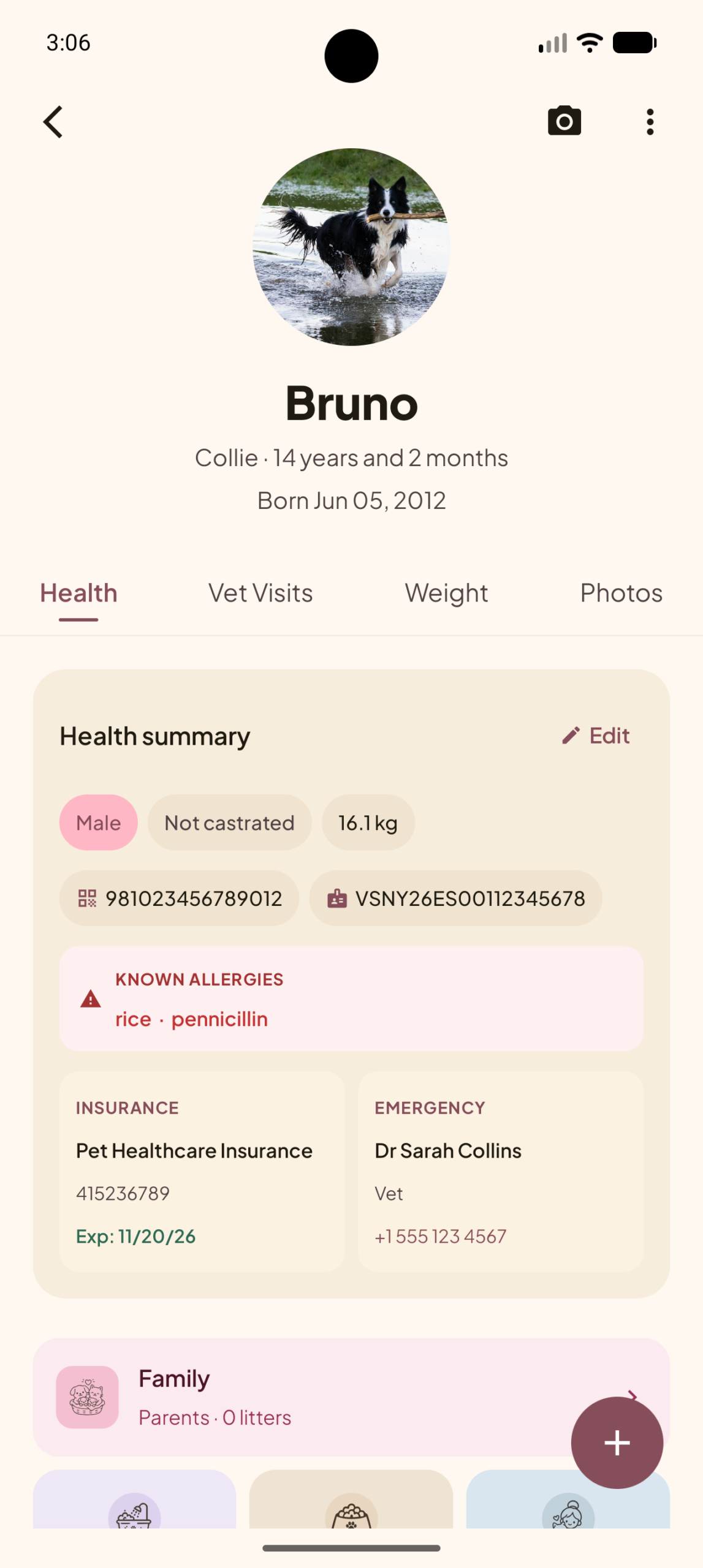
The hardest part of pet medical history usually isn’t knowing what to track — it’s that it ends up scattered across a vet’s paper folder, a phone notes app, and memory, none of which talk to each other. Mochi keeps vaccines, weight, medications, and vet visit notes together per pet, so pulling up a real history at a new vet’s front desk takes seconds instead of a reconstruction exercise.