A single missed month of flea prevention is enough to undo a full year of consistent treatment — fleas can establish an infestation in a home within weeks, and by the time they’re visible, the environment (carpets, bedding, furniture) is usually already involved, not just the cat.
Quick Reference: Typical Reapplication Windows
| Product Type | Typical Frequency | Notes |
|---|---|---|
| Topical spot-on treatments | Every 30 days | Most common type; timing is the single biggest factor in effectiveness |
| Oral flea/tick medication | Every 30-90 days depending on product | Duration varies significantly by brand — check the specific product, not a general rule |
| Flea collars | Every 6-8 months (varies by brand) | Some newer collars claim longer coverage; older or generic ones often don’t last as advertised |
Why Timing Matters More Than the Product
Most flea and tick products work by staying at an effective concentration in the skin/bloodstream for a set window, then gradually losing effectiveness before the «expiration» date arrives in a hard cutoff. Applying even a few days late repeatedly can create small gaps in protection that add up over months — which is part of why a fixed reminder tends to outperform «whenever I remember» as a strategy, more than switching to a supposedly stronger product does.
Do Indoor-Only Cats Still Need This?
Yes, in most cases — though the risk level is genuinely lower than for cats with outdoor access:
- Fleas can enter a home on other pets, on clothing and shoes, or through window screens
- A multi-pet household where even one animal goes outside puts indoor-only cats at real risk too
- Some vets recommend a lighter or less frequent protocol for strictly single-cat, no-outdoor-contact households — this is a reasonable conversation to have directly with a vet rather than assuming either extreme (skip entirely, or treat exactly like an outdoor cat)
Signs Prevention May Have Lapsed
- Excessive scratching or grooming focused on one area, especially the base of the tail
- Small dark specks in fur that turn reddish-brown when placed on a damp paper towel («flea dirt,» which is digested blood)
- Visible fleas, most easily spotted on the belly or around the neck when fur is parted
What to Do This Week
- Check the exact reapplication window for your current product — not a general «monthly» assumption, since some oral medications last longer
- Note the actual last-applied date if you’re not sure, rather than guessing
- If your cat is indoor-only, this is a reasonable moment to ask your vet whether your current protocol still fits your household’s actual risk level
Staying on the Actual Schedule
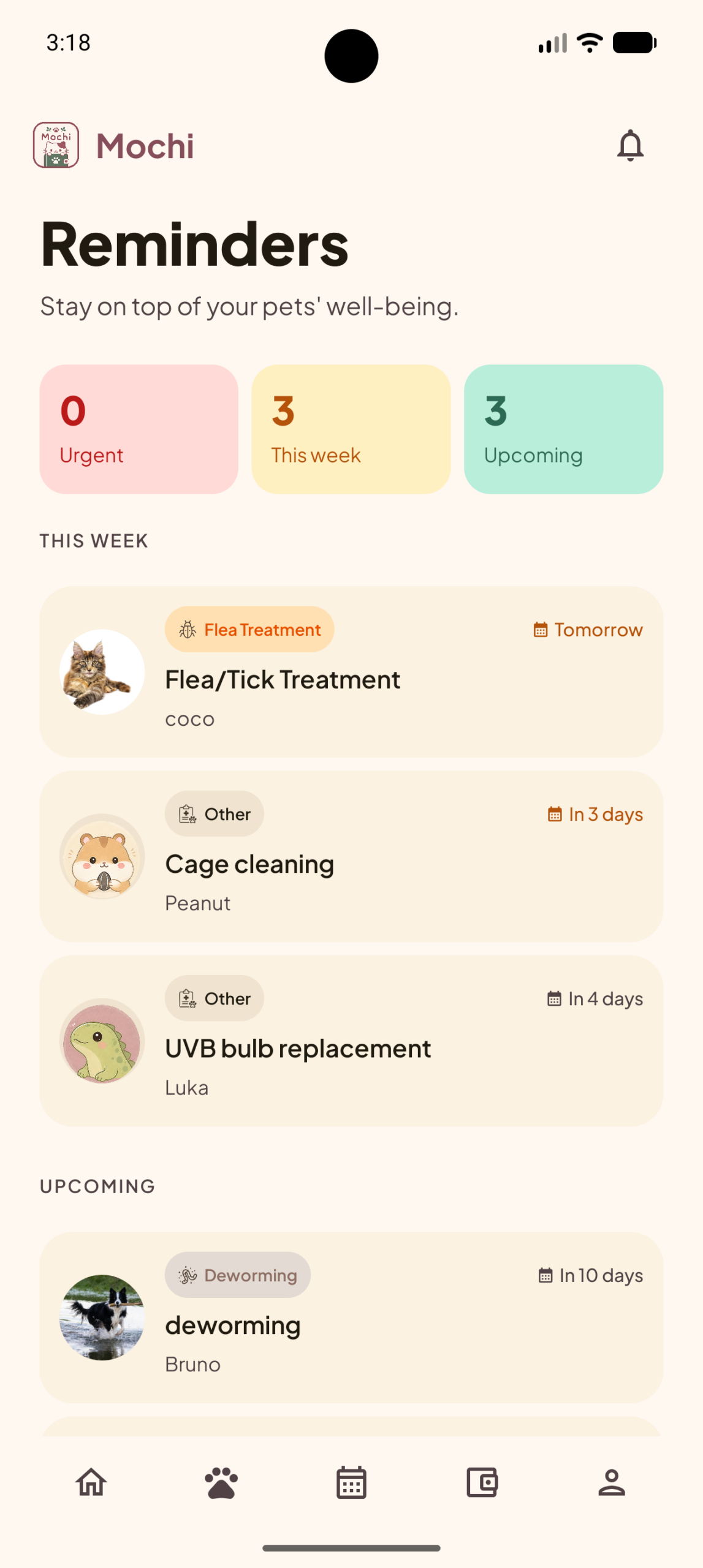
Flea and tick prevention is one of the few pet-care tasks with a hard, product-specific deadline rather than a flexible «sometime this month» window — which makes it a poor fit for memory alone. Mochi’s reminders let you set the exact interval for your specific product, so a 30-day topical and a 90-day oral medication don’t get mentally rounded to «monthly» and drift out of sync with what’s actually on the label.