My neighbor’s dog skipped breakfast on a Tuesday, and by Wednesday morning she was in the vet’s waiting room convinced something was seriously wrong — only to find out the dog had just eaten a full bag of treats from a visiting nephew the day before and was, in the vet’s words, «just full.» One skipped meal sent her into a spiral that a simple log of what the dog actually ate that week would have solved in five seconds.
When It’s Probably Nothing
- One skipped meal, otherwise normal energy, normal water intake, no vomiting or diarrhea
- A recent treat-heavy day, a new food transition, or a hot day (heat genuinely reduces appetite in dogs)
- Some dogs are naturally grazers and skip a meal here and there without it meaning anything
When It’s Worth Watching Closely
- Not eating for more than 24 hours, even with otherwise normal behavior
- Skipping food but still drinking water and acting energetic — worth a call to the vet, not necessarily an emergency visit
- A picky pattern that’s new, not lifelong (a dog that’s always been food-motivated suddenly refusing meals is a bigger signal than a dog that’s always been finicky)
When to Call the Vet Same-Day
- Not eating combined with vomiting, diarrhea, lethargy, or visible pain
- Not eating for more than 48 hours regardless of other symptoms
- A puppy or senior dog not eating for even 24 hours — both groups tolerate fasting worse than a healthy adult dog
What to Actually Track Before You Panic
Most «my dog won’t eat» situations get less scary once you look at the actual pattern instead of the one meal that triggered the worry:
- When did they last definitely eat, and how much
- Any treats, table scraps, or new foods in the last 48 hours
- Water intake — normal, increased, or decreased
- Energy level and any other symptoms (vomiting, diarrhea, limping, restlessness)
- Any recent changes — new food brand, new environment, a recent vet visit or vaccine
Writing these down in the moment is more reliable than trying to remember them a day later once you’re already worried and second-guessing the timeline.
Building a Diet Plan for a Picky Eater
If the not-eating is becoming a pattern rather than a one-off, a structured diet plan helps more than switching foods repeatedly:
- Stick with one food for at least 5-7 days before deciding it’s not working — constant switching can itself cause pickiness
- Rule out free-feeding as the cause — a dog with food available all day sometimes just isn’t hungry at the scheduled mealtime
- Keep treats to a small percentage of daily intake, since it’s an easy thing to lose track of if multiple people in the house are feeding the dog
Keeping the Log Without the Stress
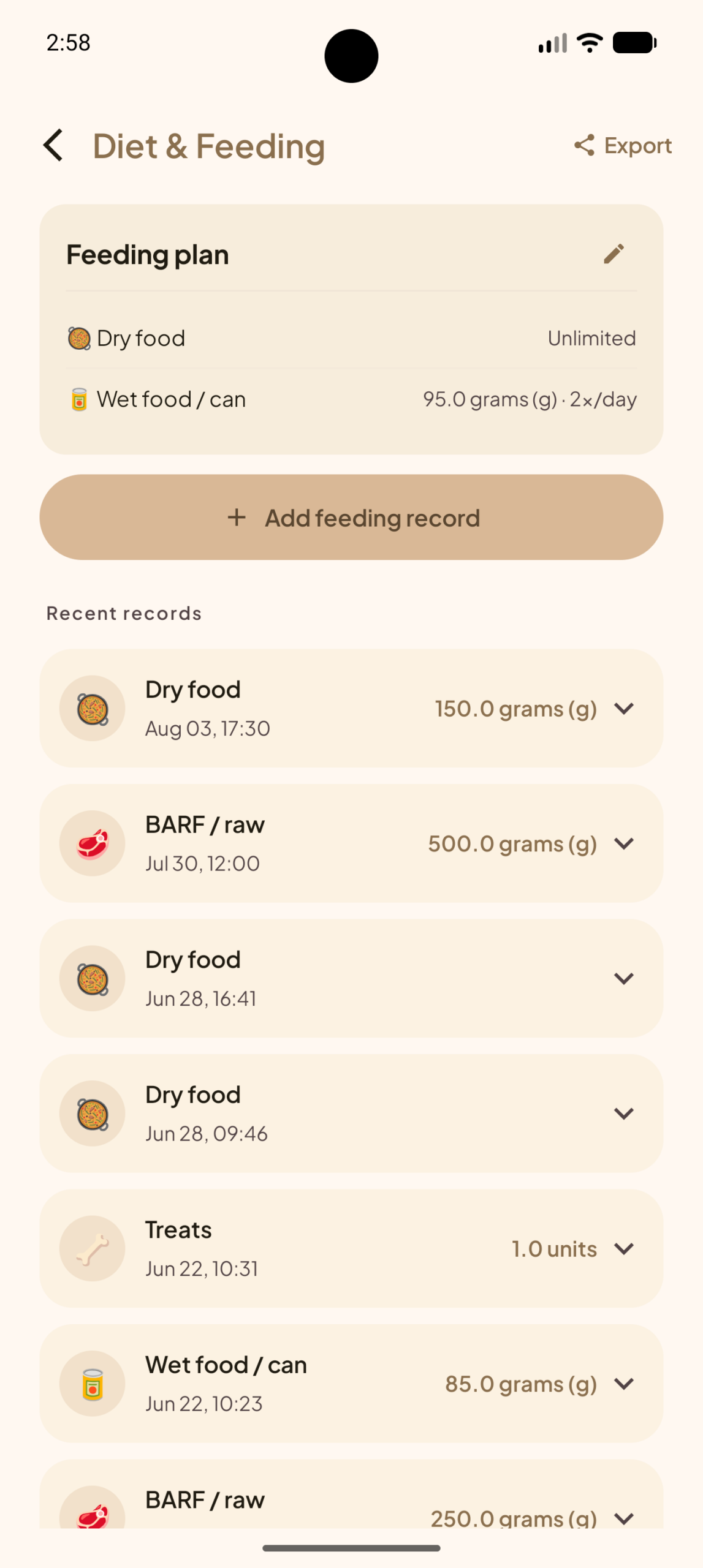
The hardest part of a «won’t eat» situation is usually not the dog — it’s trying to remember, three days in, whether this is actually the third skipped meal or just the first one that felt scary. Mochi’s diet log turns each meal into a quick entry, so if you do end up calling a vet, you can hand over an actual pattern (dates, amounts, symptoms) instead of a stressed guess.
Most appetite dips resolve on their own. The ones that don’t tend to come with other signs alongside — which is exactly why tracking the pattern matters more than reacting to any single skipped meal.