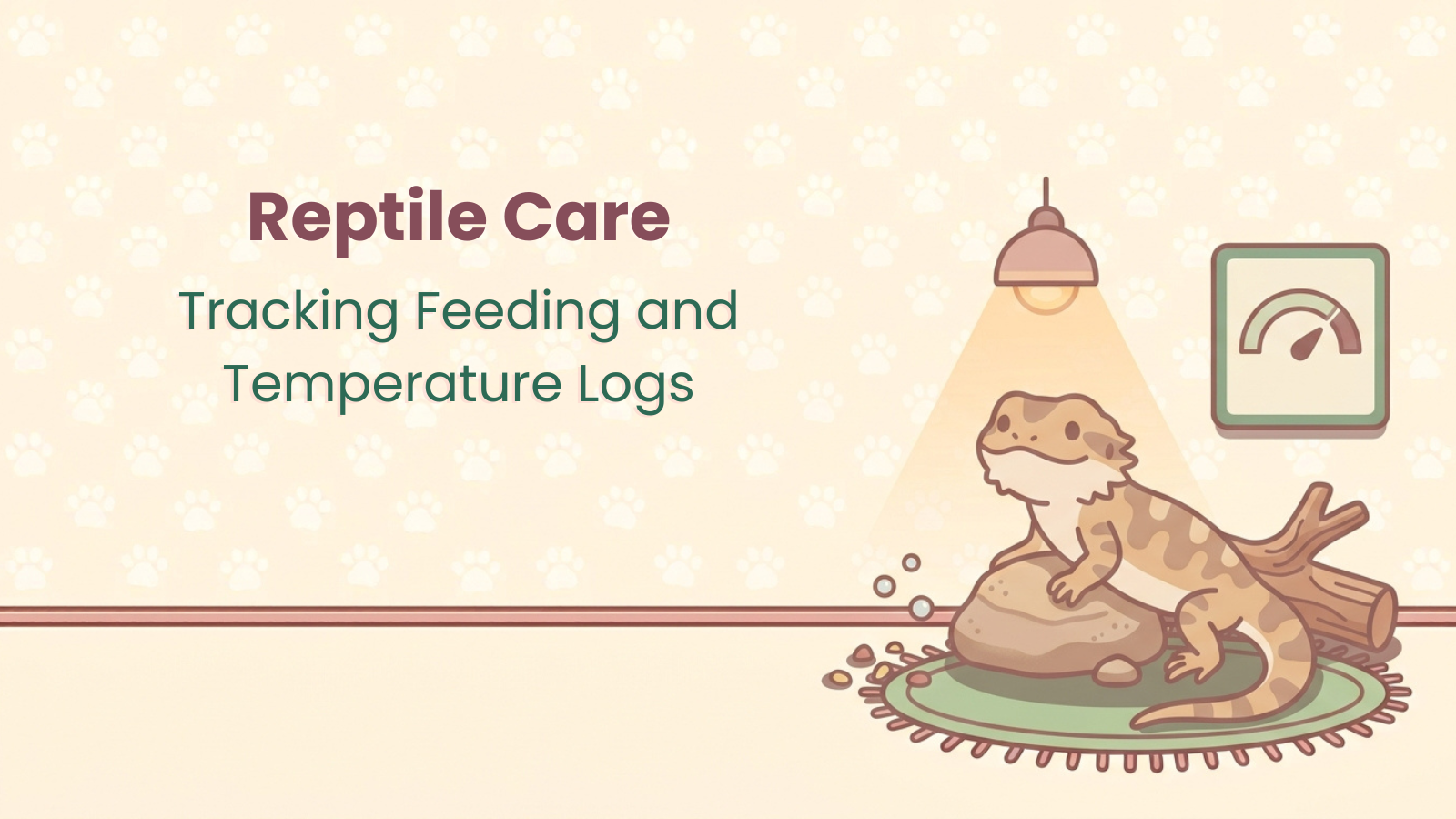
A reptile’s body temperature isn’t something you can eyeball the way you’d notice a dog shivering — it depends entirely on an enclosure’s temperature gradient being right, which is exactly why reptile care leans so heavily on logs and numbers instead of the instinct-based checks that work for cats and dogs.
Why Reptiles Are Different: The Ectotherm Basics
Reptiles are ectothermic — they don’t generate their own body heat the way mammals do, and rely entirely on their environment to regulate temperature. This single fact drives almost everything about reptile husbandry:
- Digestion, immune function, and even appetite are directly tied to whether the enclosure’s temperature gradient is correct
- A reptile that’s too cold can stop eating or fail to digest food properly, sometimes leading to serious complications, without any other obvious symptom
- «Room temperature» is never sufficient on its own — enclosures need a deliberate warm side and cool side, not a single ambient temperature
What to Track — By Category
Temperature (daily, ideally twice — day and night readings)
- Basking spot temperature (varies significantly by species — a bearded dragon’s basking spot needs run considerably hotter than a leopard gecko’s)
- Cool-side temperature, to confirm the gradient actually exists, not just the hot end
- Nighttime temperature drop, if the species requires one
Humidity (daily, especially for species prone to shedding issues)
- Many shedding problems trace back to humidity being wrong for weeks before anyone notices, since the reptile «seems fine» until a bad shed happens
Feeding (per feeding, not just «fed today»)
- What was fed, how much, and whether it was fully eaten — refused food is one of the earliest signs something’s off, and it’s easy to miss if feeding isn’t logged consistently
- Feeding frequency varies enormously by species and age (some snakes eat every 1-2 weeks, some lizards eat daily) — a generic «feed your reptile regularly» isn’t specific enough to actually plan around
UVB bulb age (if applicable)
- UVB output degrades well before the bulb visibly stops working — most manufacturers recommend replacement every 6-12 months regardless of whether the bulb «looks fine,» which is easy to forget without a logged replacement date
Common Mistakes Worth Naming
- Assuming a thermometer sticker or the enclosure’s built-in display is accurate — a separate digital thermometer with a probe at each end of the gradient gives a more reliable reading
- Treating «reptile» as one care plan — a bearded dragon, a leopard gecko, and a corn snake have meaningfully different temperature, humidity, and feeding needs, despite all being reptiles
- Not replacing UVB bulbs on schedule, since a bulb that still produces visible light can have already dropped below effective UVB output
What to Do This Week
- Check both ends of the enclosure with an actual thermometer, not just the built-in display, and note both readings
- Confirm when the UVB bulb was last replaced — if it’s been over a year, that’s worth prioritizing regardless of appearance
- Start logging feedings if you’re not already, including whether food was refused
Keeping the Numbers Straight
Reptile care is one of the few areas of pet care where a missed log entry can matter more than a missed instinct — you can’t «just tell» if a basking spot has drifted a few degrees over time the way you’d notice a dog losing weight. Mochi’s tracking handles temperature, feeding, and UVB replacement as separate logged items, so a gradual drift in one of them shows up as a trend instead of staying invisible until something goes wrong.